

Throughout history, horses have galloped alongside humanity as companions, workers, and warriors, leaving hoof prints across our shared cultural landscape. While Arabian, Thoroughbred, and Clydesdale breeds often dominate popular knowledge, the equine world contains far more diversity than most realize. Hidden within remote valleys, preserved by dedicated breeders, or nearly lost to time, several legendary horse breeds carry fascinating histories and characteristics that rarely make mainstream conversation. These equine treasures represent centuries of selective breeding, adaptation to extreme environments, and cultural significance that extends far beyond their physical capabilities. From horses with metallic coats to those that survived near extinction, this exploration will introduce you to some of the most extraordinary yet lesser-known equine breeds on the planet.
The Akhal-Teke: Nature’s Living Metallic Masterpiece
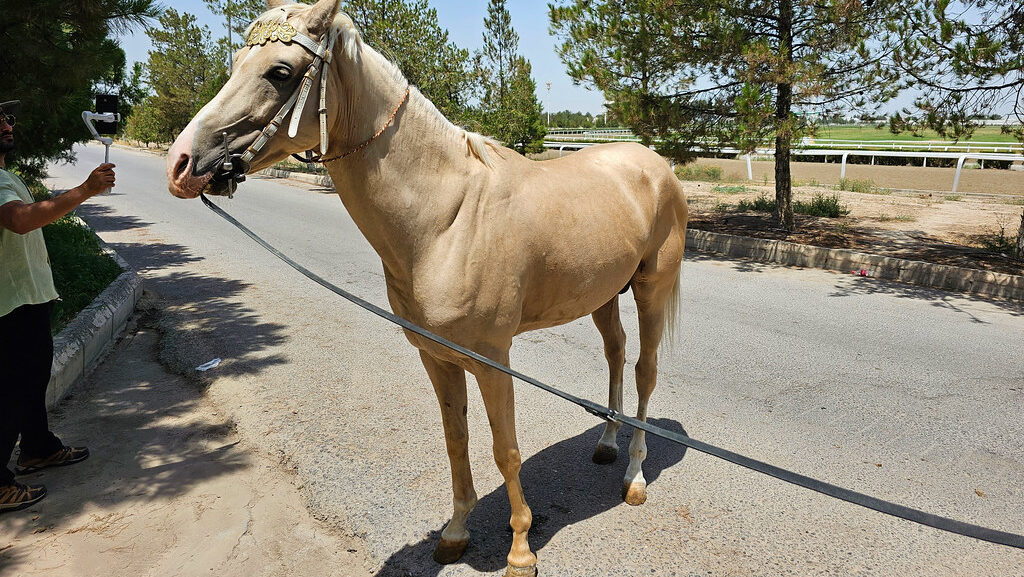
Often called “the golden horse” or “horses from heaven,” the Akhal-Teke from Turkmenistan possesses a coat unlike any other horse breed in the world. Their distinctive metallic sheen results from a unique structure of the hair shaft that refracts light, creating an almost supernatural glow, particularly evident in their golden palomino and buckskin varieties. Beyond their striking appearance, these horses evolved in desert conditions, developing remarkable endurance and the ability to survive with minimal water and food. The breed dates back at least 3,000 years, making it one of the world’s oldest surviving horse breeds, having influenced many modern warmblood breeds. Once considered so valuable that they were gifted only to kings and warriors, today fewer than 6,500 purebred Akhal-Tekes exist worldwide, with dedicated preservation programs working to maintain their distinctive genetics.
Marwari Horses: The Warriors with Inward-Curling Ears

Originating from the Marwar region of India, Marwari horses are instantly recognizable by their unique inward-curling ears that can rotate 180 degrees independently. These distinctive ears aren’t just visually striking—they served a practical purpose, helping riders communicate through subtle ear touches during battle when voice commands would alert enemies. Marwari horses were bred specifically for war, developing legendary loyalty that would lead them to remain with fallen riders on battlefields rather than flee. The breed nearly disappeared during British colonial rule when crossing with European horses was encouraged, driving pure Marwaris to the brink of extinction. Today, export restrictions remain tight as India considers these horses a national treasure, with fewer than 1,000 purebred Marwaris believed to exist, making them one of the rarest horse breeds in the world.
Bashkir Curly: The Hypoallergenic Horse That Defies Winter

The Bashkir Curly presents a biological marvel as potentially the only hypoallergenic horse breed in existence, producing protein-free hair that rarely triggers allergic reactions in humans sensitive to equines. Their distinctive curly coat—ranging from slight waves to tight Marcel-like curls—doesn’t just define their appearance but serves a crucial survival function, providing exceptional insulation against extreme cold weather. Unlike most horse breeds, Curlies undergo a complete seasonal shedding, sometimes losing their curly manes and tails entirely during summer months only to regrow them for winter. The origin of these horses remains shrouded in mystery, with some theories suggesting they descended from Russian Bashkir horses, while genetic studies indicate no actual connection to Russian breeds, deepening the enigma of their evolutionary path. Despite their gentle temperament and unique characteristics, their unusual appearance initially caused them to be considered undesirable, with some ranchers culling them from herds until dedicated preservation began in the 1930s.
Falabella: The Miniature Marvel with Full-Size Genetics

Unlike other miniature horses, the Falabella isn’t simply a pony but a true horse in miniature form, maintaining perfect horse proportions while standing just 21-34 inches tall at the withers. Developed in Argentina by the Falabella family beginning in the 1800s, these tiny equines represent a breeding achievement that took generations to perfect through selective breeding of the smallest Thoroughbreds, Shetland ponies, and Criollos. Despite their diminutive size, Falabellas possess remarkable strength and longevity, routinely living 40-45 years—nearly twice the lifespan of average-sized horses. Their genetic makeup is so stable that they consistently produce offspring of similar size, unlike many other miniature breeds where standard-sized foals can unexpectedly appear. Though tiny, authentic Falabellas command premium prices, with exceptional specimens selling for $15,000 to $50,000, reflecting their rarity and the centuries of selective breeding behind them.
Knabstrupper: The Leopard-Spotted Horses of Danish Royalty

With their distinctive leopard-spotted coats reminiscent of Dalmatian dogs, Knabstruppers have been called “night riders’ horses” because their spots make them highly visible in darkness, a feature once valued by nobility traveling at night. The breed traces its modern lineage to a single mare named Flæbehoppen, purchased in 1808 by Major Villars Lunn of Denmark, whose striking spotted coat passed with remarkable consistency to her offspring, establishing the foundation of today’s Knabstrupper breed. Their distinctive patterning results from the same complex genetic mechanism found in Appaloosas, called the leopard complex (LP), though the Knabstrupper developed independently in Europe long before any contact with American spotted horses. Historically associated with circus performances due to their flashy appearance and intelligence, Knabstruppers performed in royal courts and traveling shows across Europe during the 18th and 19th centuries. Despite their visual appeal and athletic capabilities, the breed faced near-extinction multiple times, most seriously after an 1891 fire at the main breeding farm killed most of the breeding stock, leading to significant crossbreeding with other breeds to save the bloodline.
The Przewalski’s Horse: The Last Truly Wild Horse

Distinguished from all domestic horses by possessing 66 chromosomes rather than the 64 found in domestic breeds, Przewalski’s horses represent the only truly wild horse species surviving today, never having been domesticated by humans. Named after Russian explorer Nikolai Przewalski who first described them to Western science in 1881, these horses went completely extinct in the wild by the 1960s, surviving only in zoos before successful reintroduction efforts began in Mongolia in the 1990s. Physically distinct from domestic horses, they feature consistent dun coloration with primitive markings, upright manes lacking a forelock, and shorter, stockier builds adapted for survival in harsh steppe environments. Their successful recovery from just 12 breeding individuals represents one of conservation’s greatest success stories, though they remain critically endangered with approximately 2,000 individuals existing today. Recent genetic studies revealed something unexpected: these horses carry some domestic horse DNA, indicating limited crossbreeding occurred in the past, though they remain genetically distinct enough to be considered a separate species.
Icelandic Horse: The Five-Gaited Viking Time Capsule

Isolated on Iceland for over 1,000 years with strict import bans, Icelandic horses represent a genetic time capsule of Viking-era horses, remaining virtually unchanged since Norse settlers first brought them to the island in the 9th and 10th centuries. Unlike most horse breeds that perform three or four gaits, Icelandics naturally perform five distinct gaits: walk, trot, canter, tölt (a smooth four-beat gait), and flying pace, a lateral two-beat gait where the horse can reach speeds up to 30 mph. Iceland’s isolation policy for these horses is so strict that once an Icelandic horse leaves the country, it can never return, and no horse of any breed has been allowed into Iceland since 982 CE, creating the purest horse lineage in the world. Despite their small stature—standing 13-14 hands high—Icelanders are never referred to as ponies due to their weight-carrying ability, strength, and cultural significance, with Icelandic language having no word for “pony.” These hardy animals evolved to survive on minimal forage in sub-Arctic conditions, developing thick double coats that shed completely each summer and growing winter coats with hair up to 40% longer than summer coats.
The Karabakh: Azerbaijan’s Copper-Colored Mountain Horse

The Karabakh horse, revered as Azerbaijan’s national animal, is distinguished by its unique “golden” or copper-metallic coat color called “zil” that shimmers in sunlight—a characteristic so valued that historically, horses lacking this distinctive sheen were excluded from the breeding program. These mountain horses developed remarkable adaptations for navigating difficult terrain, including exceptionally hard hooves that rarely require shoeing and distinctive “deer-like” high-stepping movements that enable precise foot placement on rocky slopes. Named after the Karabakh region where they originated, these horses possess extraordinary endurance, historically capable of covering 35 kilometers without rest while carrying a fully-equipped rider, even in mountainous conditions. The breed faced near-extinction during the Nagorno-Karabakh conflict between Azerbaijan and Armenia, with numbers plummeting to fewer than 100 purebred individuals in the 1990s, prompting intensive conservation efforts that continue today with the breed still considered critically endangered despite recent recovery efforts.
Namib Desert Horse: The Mysterious Wild Horses of Africa

Surviving in one of Earth’s harshest environments where annual rainfall averages just 100mm, the wild Namib Desert Horses have adapted to go up to five days without water, traveling up to 20 kilometers between their grazing grounds and watering holes. Their origins remain one of equine world’s greatest mysteries, with leading theories suggesting they descended from German cavalry or mining horses abandoned during World War I, or perhaps from a shipwreck off the Skeleton Coast. Despite being non-native to Africa, these horses have developed unique adaptations to desert life, including the ability to survive by eating the poisonous !nara melons that grow in the region when other food sources become scarce. With a population fluctuating between just 80-300 individuals depending on drought conditions, they represent one of the world’s rarest populations of wild horses, surviving without human intervention except during extreme droughts when conservation authorities sometimes provide emergency water sources. Genetic testing has revealed these horses possess unusual genetic diversity despite their small population, suggesting they may have originated from multiple distinct horse breeds, adding another layer to their enigmatic history.
The Maremmano: Italy’s Ancient Cavalry Horse

The Maremmano horse evolved in the marshy Maremma region of Italy, developing over centuries into a breed uniquely adapted to the region’s malarial swamps, with natural disease resistance that made them invaluable in areas where other horses quickly succumbed to illness. Their distinctive closed-cell lung structure—an adaptation found in few other mammals—allows them to function effectively in extremely humid conditions where most horses would suffer respiratory distress. Historically used by the butteri (Italian cowboys) to manage the region’s fierce Maremmana cattle, these horses developed legendary agility and boldness, famously demonstrated in 1902 when local butteri challenged and defeated Buffalo Bill’s cowboys in cattle management competitions during his European tour. The breed’s wartime contributions remain significant in Italian history, as the preferred mount of Italian cavalry through both World Wars, with their exceptional balance and sure-footedness making them particularly effective in mountain warfare during Alpine campaigns. Though modernization threatened their existence as agricultural workhorses, conservation programs focusing on their military and cultural heritage have preserved the breed, which now excels in modern eventing and dressage competitions while maintaining working roles in Italy’s protected nature reserves.
The Hokkaido Washu: Japan’s Samurai War Horse

The Hokkaido horse, also known as Dosanko, evolved to survive Hokkaido’s harsh winters where temperatures routinely plunge below -30°C, developing thick winter coats and specialized fat distribution that makes them one of the most cold-resistant horse breeds in the world. Unlike most horse breeds that were developed primarily for riding or draft purposes, the Hokkaido was bred specifically for versatility, performing equally well under saddle, as pack animals, and in agricultural work—a necessity in the isolated northern Japanese island where specialized animals were an unaffordable luxury. Archaeological evidence suggests horses have existed on Hokkaido for at least 2,000 years, though the modern breed was refined during Japan’s samurai era when sturdy, sure-footed mounts were required for armored warfare in mountainous terrain. Following World War II, mechanization nearly caused the breed’s extinction, with numbers falling to fewer than 200 individuals before preservation efforts began, focusing on their cultural significance as a living link to traditional Japanese agricultural and military heritage. Today, with approximately 3,000 individuals, they remain an important cultural treasure, protected by Japan’s government as a “Natural Monument” with special breeding programs ensuring their distinctive characteristics are preserved for future generations.
Galiceño: The Living Legacy of Spanish Conquistadors

Standing just 12-13.2 hands high, Galiceños represent direct descendants of the small Spanish horses brought to the Americas by conquistadors in the 16th century, preserving genetic traits now extinct in most European Spanish horses due to centuries of crossbreeding. Despite their small stature, these horses were prized for their remarkable endurance, historically capable of covering 40 miles a day at a running walk while carrying adult riders—a trait that made them indispensable for communication in the early colonial Americas. The breed’s unique ambling gait, called the “paso llano,” provides exceptional smoothness for riders, historically allowing messengers to travel long distances while reading or writing documents in the saddle without disruption. Following the Mexican Revolution of 1910, when large haciendas that preserved pure breeding programs were broken up, Galiceños faced near-extinction until preservation efforts began in the 1950s, with dedicated breeders working to identify and conserve the remaining pure specimens. Today, with fewer than 800 registered individuals in North America, Galiceños remain critically endangered despite growing appreciation for their historic significance, superior endurance, and natural suitability for modern trail riding and endurance competitions.
Sorraia: The Primitive Ancestor of Iberian Horses

Discovered in Portugal’s Sorraia Valley in 1920, these primitive horses are considered living fossils representing the pre-domestic ancestor of Iberian horses, with cave paintings dating back 22,000 years depicting horses with identical physical characteristics. Their distinctive physical characteristics include consistently dun or grulla coloration with primitive markings (dorsal stripes, shoulder crosses, and leg barring), convex facial profiles, and low-set tails—features that fossil evidence suggests have remained unchanged for thousands of years. Genetic studies have identified the Sorraia as possessing some of the oldest mitochondrial DNA lineages found in any modern horse, supporting theories that they represent a direct survival of the wild European horse rather than a feral descendant of domesticated animals. With fewer than 200 pure Sorraias existing worldwide, they rank among the world’s most endangered horse populations, maintained primarily by Portuguese and German conservation programs focused on preserving their unique primitive genetics. Recent discoveries have identified nearly identical horses living semi-wild in isolated areas of Brazil, descendants of horses brought by Portuguese colonists in the 16th century, providing an unexpected genetic reservoir that might help save this ancient breed from extinction.
conclusion

These legendary horse breeds represent more than just biological diversity—they embody centuries of human history, cultural adaptation, and the remarkable resilience of equines in partnering with humanity across diverse environments. From the metallic-coated Akhal-Teke that traversed ancient Silk Road trade routes to the primitive Sorraia that may represent the very image of horses our ancestors painted on cave walls millennia ago, each breed carries genetic and cultural heritage worth preserving. As modern agriculture and transportation increasingly rely on technology rather than horsepower, these rare breeds face uncertain futures. Their preservation depends on dedicated breeders, cultural appreciation, and growing recognition of their value not just as living history but as genetic reservoirs of adaptability, hardiness, and specialized traits developed over centuries. By understanding and celebrating these hidden equine treasures, we ensure that future generations can continue to marvel at the diversity and beauty of these legendary partners that have carried humanity through our shared history.