
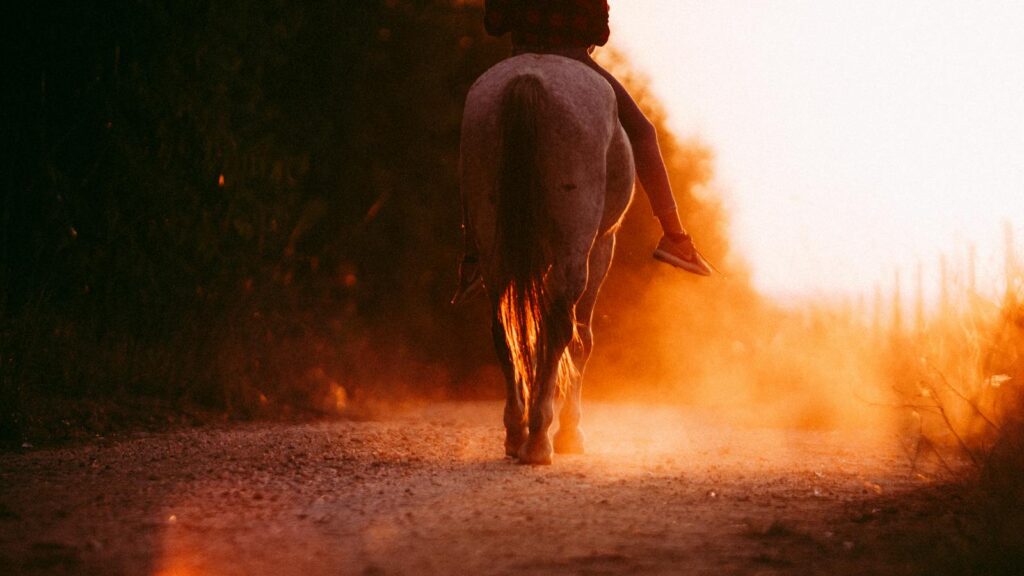
When most people think of ranch life, they often envision cowboys herding cattle across open plains or tending to livestock in picturesque barns. However, there’s a complex and fascinating element of ranching that rarely makes it into popular culture: trail navigation. Far more than simply finding one’s way from point A to point B, effective trail navigation on a ranch involves an intricate understanding of terrain, weather patterns, animal behavior, and centuries-old wisdom passed down through generations. Whether managing thousands of acres in Montana or a small family operation in Texas, the ability to navigate ranch trails effectively can mean the difference between prosperity and failure. Let’s explore some surprising truths about this essential but often overlooked aspect of ranch life.
The Ancient Roots of Ranch Trail Systems
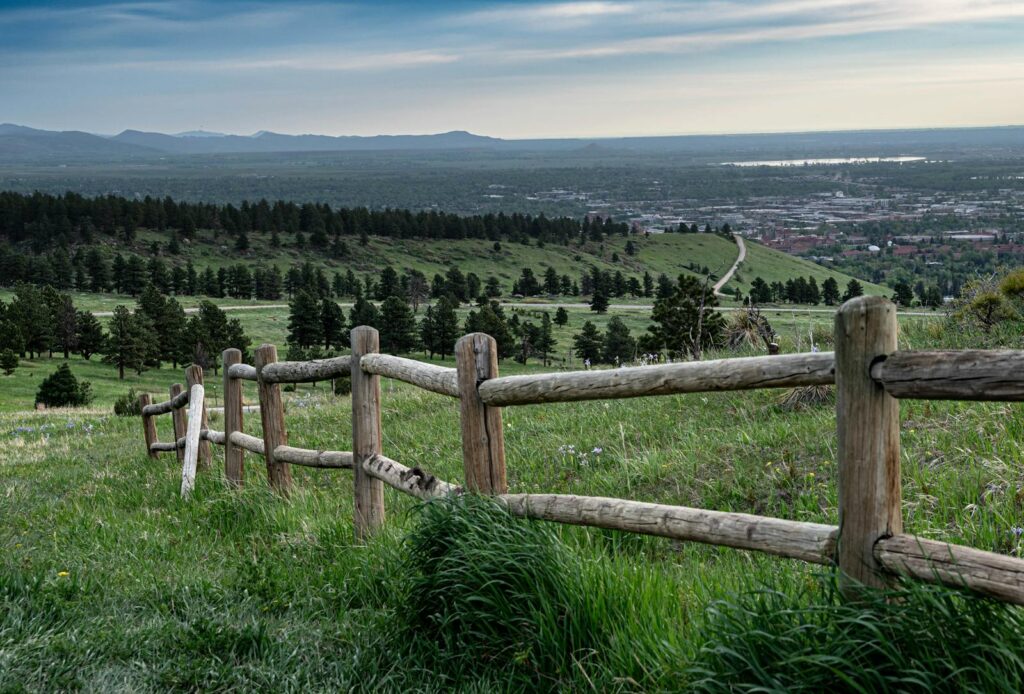
Many of today’s ranch trails follow pathways that were established centuries before modern ranching began. Native American travel routes, game trails used by bison and deer, and even ancient geological formations often determine where ranch trails develop. On many historic ranches in the American West, cowboys still traverse paths that indigenous peoples used for thousands of years. These naturally efficient routes typically follow the path of least resistance through challenging terrain, utilizing natural features like ridge lines and river crossings. Some ranchers can trace the origins of their most important trails back to prehistoric times, with archaeological evidence showing consistent human and animal use for millennia. Understanding this historical context helps modern ranchers appreciate why certain trails exist where they do, even when they might seem illogical at first glance.
Weather-Reading is Essential for Safe Trail Navigation

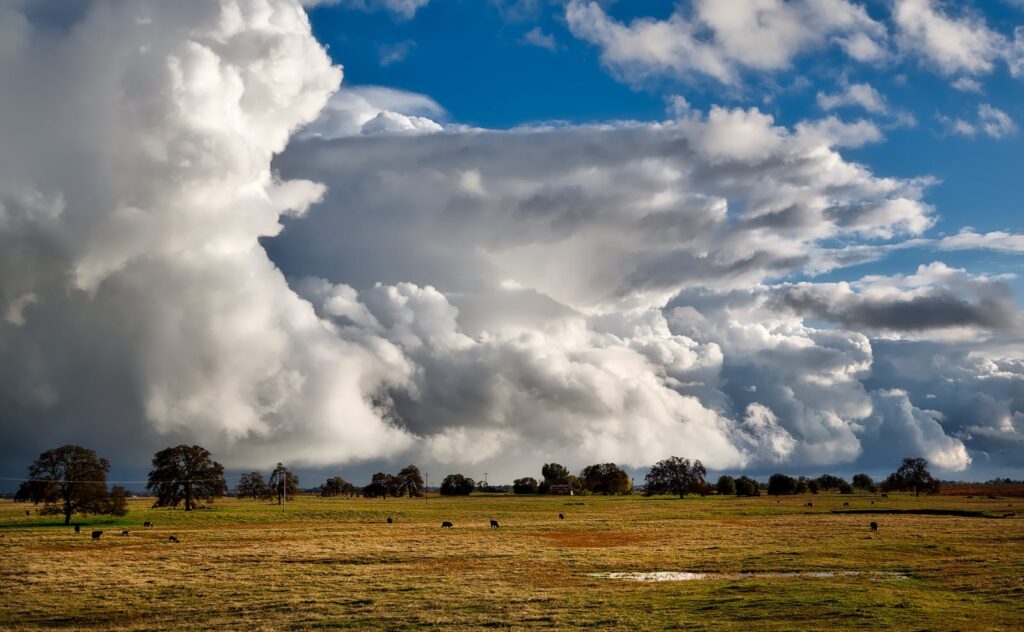
Successful ranch navigation requires an intimate knowledge of local weather patterns that goes far beyond checking a smartphone app. Experienced ranchers develop the ability to “read” approaching weather systems by observing cloud formations, wind patterns, and even animal behavior changes. This skill becomes particularly crucial when navigating trails that cross waterways, steep terrain, or areas prone to flash flooding. A trail that’s perfectly safe on a clear morning might become life-threatening by afternoon if a sudden thunderstorm develops. Generational knowledge passed down among ranching families often includes specific weather indicators unique to their property, such as how certain mountain peaks “catch” clouds before a storm or how particular bird behaviors signal changing conditions. This traditional knowledge combines with modern technology to create a comprehensive weather awareness that keeps ranchers and their livestock safe on the trails.
Cattle Actually Create and Maintain Trails
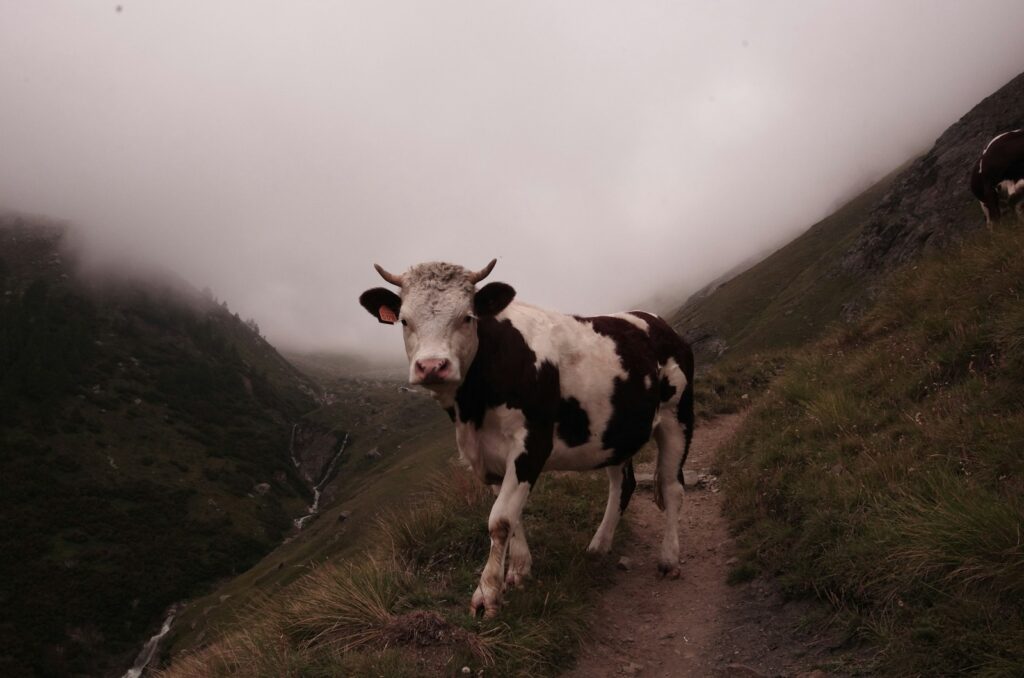
One of the most fascinating aspects of ranch trail navigation is the role that cattle themselves play in creating and maintaining the trail system. Contrary to popular belief, ranchers don’t typically construct most ranch trails—they allow their herds to establish them naturally. Cattle are creatures of habit that will consistently choose the same path when moving between water sources, feeding grounds, and sheltered areas. Over time, their hooves compact the soil and create well-defined pathways that become permanent features of the landscape. Smart ranchers observe these naturally forming cattle trails and incorporate them into their ranch management plans, often enhancing them only where necessary for safety or accessibility. This co-creation of trails between rancher and livestock represents a beautiful example of working with natural behaviors rather than against them.
GPS Technology Has Revolutionized Ranch Navigation

While traditional skills remain important, modern technology has dramatically transformed how ranchers navigate their land. GPS systems designed specifically for agricultural and ranching applications now allow precise mapping of vast properties, including marking trail systems, water sources, and property boundaries. Many ranchers combine smartphone applications with vehicle-mounted GPS systems to track their movement across the property in real-time. These technologies prove especially valuable for new ranch hands learning extensive trail systems or during emergency situations like locating stranded livestock during blizzards. Some forward-thinking ranch operations have even begun using drone technology to scout trails and monitor remote sections of their property, providing valuable data on trail conditions that would otherwise require hours of horseback riding to obtain.
Seasonal Variations Create Entirely Different Trail Systems

A surprising truth about ranch trail navigation is that the effective trail system changes dramatically with the seasons. A primary trail used during summer months might be completely impassable during spring thaw or winter snowfall. Successful ranchers maintain mental maps of seasonal trail variations across their entire property. Spring often requires avoiding low-lying areas prone to flooding or mud, while winter navigation might focus on sheltered trails that avoid snow drifts and dangerous ice formations. These seasonal shifts mean that ranch workers must actually learn multiple trail systems rather than a single set of paths. The ability to adapt navigation strategies to seasonal conditions represents one of the most challenging and sophisticated skills that experienced ranch managers develop through years of working the same land.
Natural Landmarks Trump Man-Made Markers
Despite modern technology, the most reliable navigation tools on ranches remain natural landmarks rather than man-made markers. Distinctive trees, rock formations, mountain peaks, and water features serve as the primary reference points for ranch navigation, especially in remote areas where cell service fails and batteries die. Experienced ranch hands develop intimate relationships with these landmarks, often giving them colorful nicknames that become part of the ranch’s oral tradition. This reliance on natural features creates a deep connection between ranchers and their land, as they observe subtle changes in the landscape over decades. Many ranching families pass down knowledge about these landmarks through generations, with grandparents teaching grandchildren how to navigate using the same mountain silhouette or distinctive cottonwood tree that guided them in their youth.
Trail Navigation Often Involves Reading Animal Signs
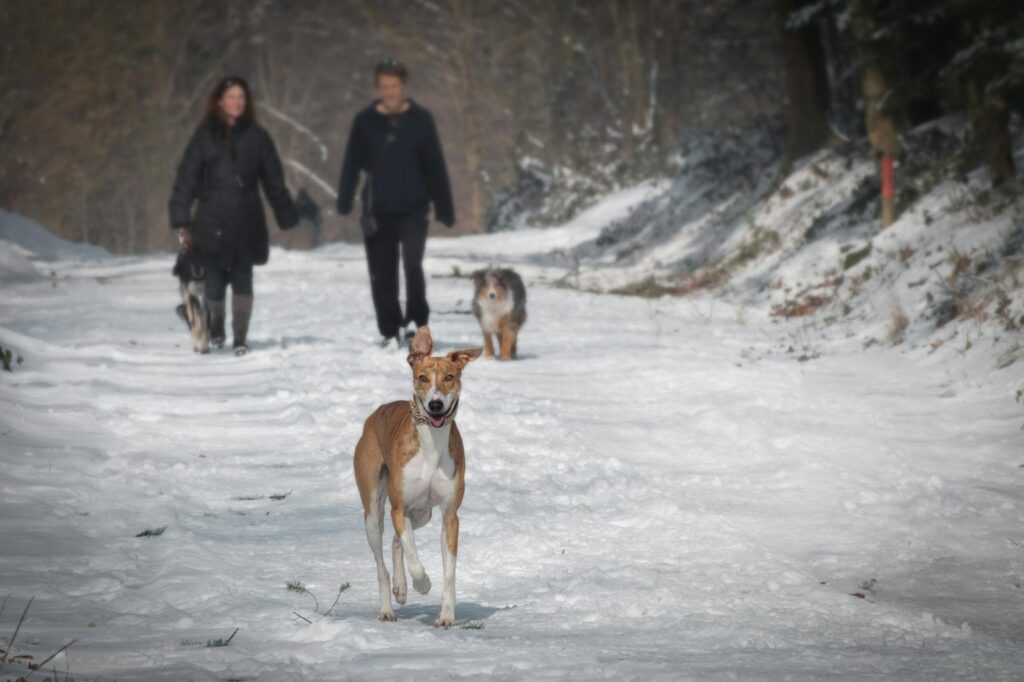
An underappreciated aspect of ranch trail navigation is the skill of reading animal signs along the way. Experienced ranchers develop the ability to determine which animals have recently used a trail, how many were present, and sometimes even identify specific individual animals by their tracks. This tracking ability serves multiple purposes beyond simply finding livestock. It helps ranchers monitor wildlife presence, detect predator activities that might threaten their herds, and assess general ecosystem health across their property. When tracking their own livestock, skilled ranchers can often tell from hoof prints whether animals are moving normally or showing signs of distress or illness. This traditional skill set connects modern ranch practices with ancient hunting traditions, creating a continuous line of knowledge that spans human history.
Water Sources Dictate Trail Patterns
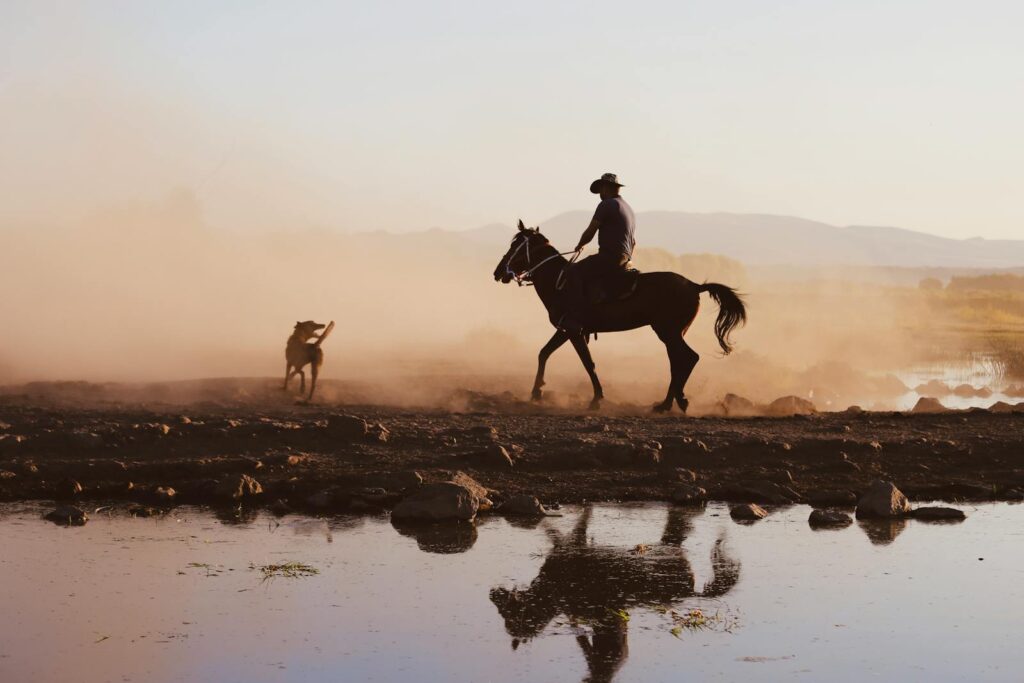
The single most important factor determining ranch trail systems is the location of water sources. Every functional ranch trail ultimately connects to reliable water access, creating a web-like pattern across the property that radiates from creeks, springs, ponds, and wells. Understanding this hydrocentric layout is essential for effective navigation, especially during drought conditions when secondary water sources might dry up. Experienced ranchers carry detailed mental maps of seasonal water availability across their entire property, knowing which springs remain active during dry spells and which creek crossings become dangerous after heavy rains. This water-focused navigation system highlights how ranch life fundamentally revolves around managing this precious resource. Many ranching families can recount stories of ancestors who discovered hidden springs or developed water sources that subsequently shaped the ranch’s entire trail system for generations.
Night Navigation Requires Specialized Skills

One of the most challenging aspects of ranch trail navigation comes when darkness falls, yet the work must continue. During calving season, predator threats, or extreme weather events, ranchers often find themselves navigating familiar trails in complete darkness. This nighttime navigation relies on entirely different skills than daytime travel, with sound and touch often replacing sight as primary senses. Experienced ranch hands learn to identify trail conditions by the sound of their horse’s or vehicle’s movement, feeling subtle changes in elevation or terrain texture. Many develop an almost supernatural ability to navigate by starlight, using celestial positioning in the same way sailors navigate oceans. These nighttime navigation skills represent some of the most impressive and least acknowledged abilities that career ranchers develop through years of necessity.
Fencing Creates Navigation Puzzles
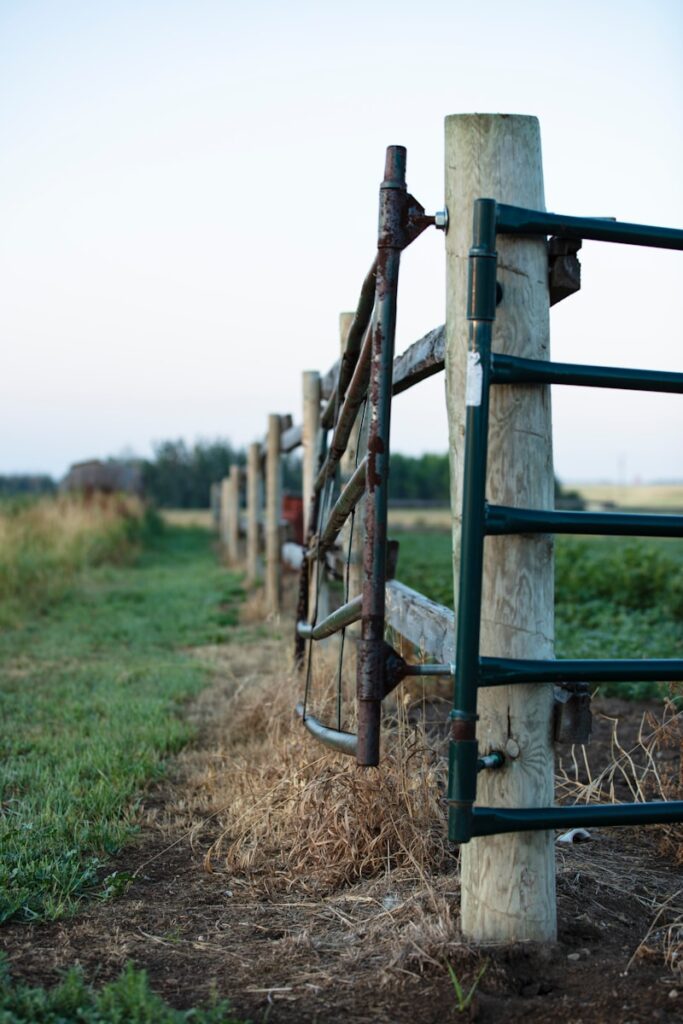
The introduction of fencing to ranching created entirely new navigation challenges that continue to shape trail systems today. Property boundaries, grazing rotation systems, and livestock management strategies all require complex fencing arrangements that turn ranch navigation into something resembling a maze. Understanding gate locations, fence crossings, and the purpose of different fenced sections becomes an essential part of effective trail navigation. This is particularly true on properties that implement rotational grazing, where fencing configurations change throughout the year. Many ranchers carry specialized tools specifically for managing fence-related navigation challenges, including gate keys, fence stretchers, and wire cutters for emergencies. The strategic placement of gates and cattle guards represents its own form of navigation planning, with poorly positioned crossings potentially adding hours of travel time across large properties.
Trail Navigation Knowledge Is Becoming Endangered
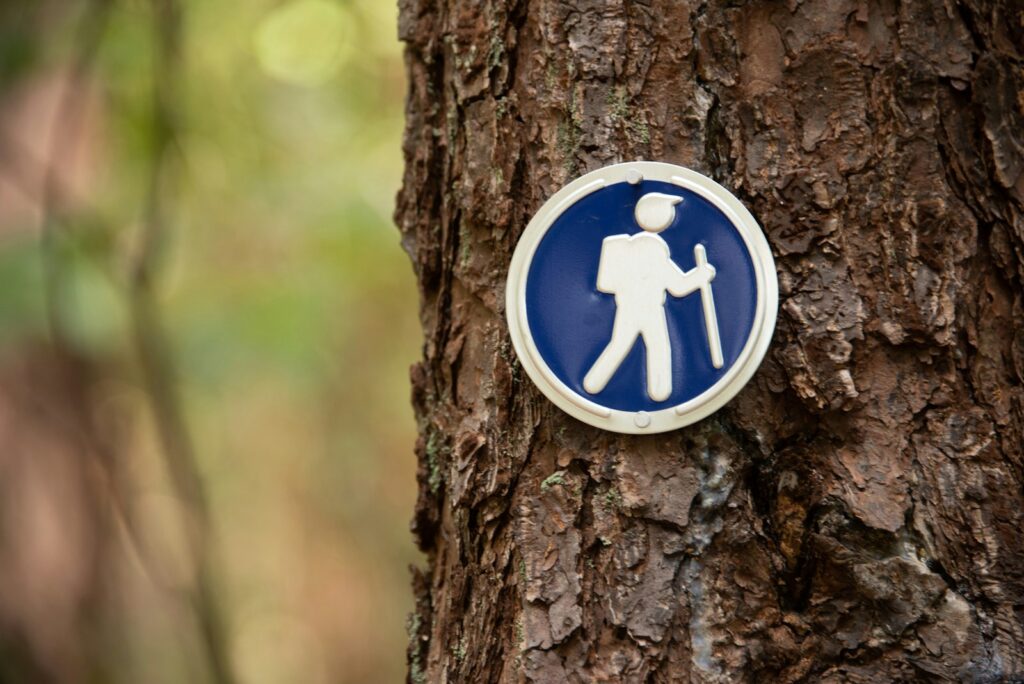
A concerning truth about ranch trail navigation is that this specialized knowledge is increasingly endangered as fewer young people enter ranching professions. The detailed understanding of local landscapes, weather patterns, and trail systems typically requires decades to develop fully, yet fewer experienced mentors remain to pass this information to the next generation. Some ranching communities have begun formal efforts to document trail knowledge, creating detailed maps and records of seasonal variations and historical information. University agricultural programs have also recognized this knowledge gap, developing courses specifically on land navigation and ranch management techniques. Despite these efforts, nothing fully replaces the accumulated wisdom of a lifetime spent navigating the same trails through changing seasons and conditions, making the preservation of this knowledge increasingly urgent.
Trail Etiquette Reflects Ranch Culture
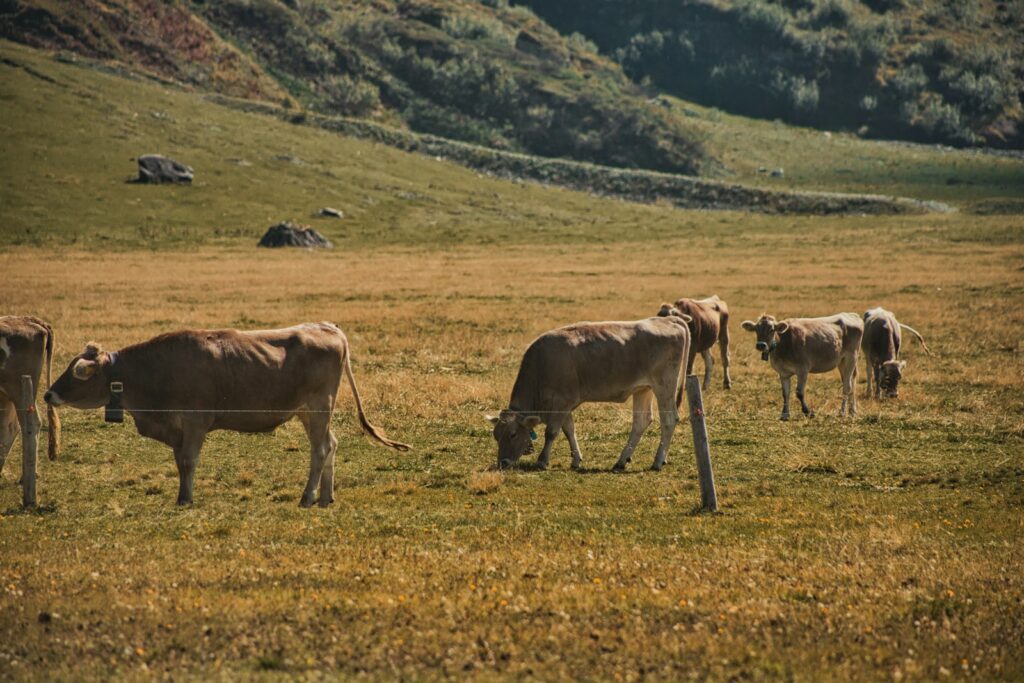
The unwritten rules governing trail use reveal much about ranch culture and values. Most ranch operations maintain clear expectations about how trails should be used, maintained, and respected by everyone on the property. These rules might include closing gates exactly as they were found, yielding to livestock movements, reporting trail damage, and respecting private property boundaries. Many ranches develop specific protocols for different types of trails, distinguishing between primary access roads that can be used by all vehicles and specialized trails restricted to horseback or ATV use only. This system of trail etiquette reflects broader ranching values of stewardship, respect for tradition, and community responsibility. For newcomers to ranch life, mastering these unspoken rules often proves as challenging as learning the physical trail system itself.
conclusion
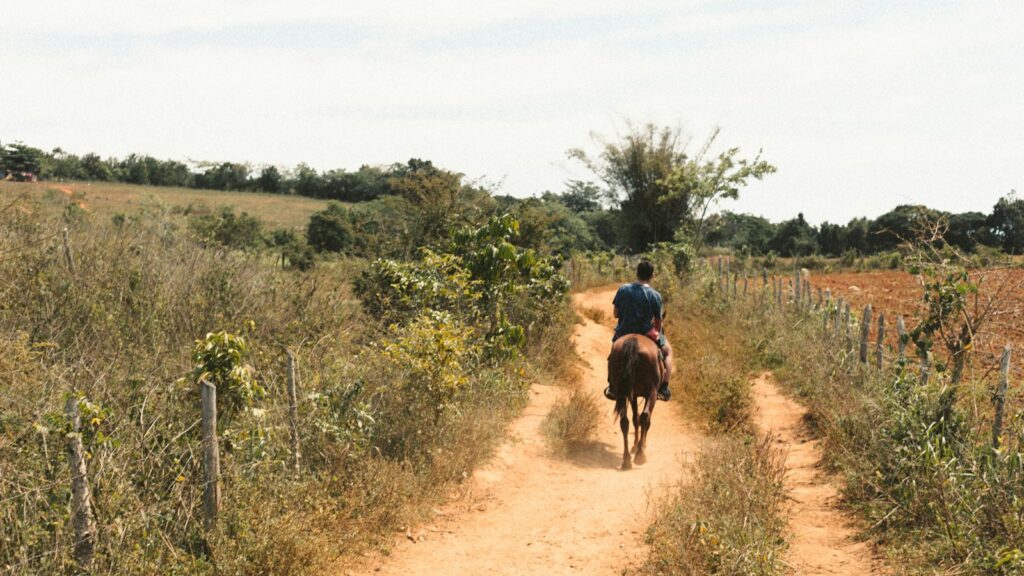
The art and science of trail navigation represents one of the most sophisticated but least visible aspects of successful ranch management. Combining ancient wisdom with modern technology, ranchers develop navigation systems uniquely adapted to their specific landscape, climate, and operational needs. As ranching continues to evolve in the 21st century, the fundamental importance of effective trail navigation remains constant—connecting humans, animals, and landscapes in a dance that has continued for centuries across the American West. For those who master it, ranch trail navigation becomes more than a practical skill; it transforms into a profound way of reading and respecting the land that supports their way of life.